
Financial wellbeing starts with clearer pay
Help employees understand their pay, pensions and deductions with instant access to payroll information. Reduce payroll queries, build trust and support better financial wellbeing every day.
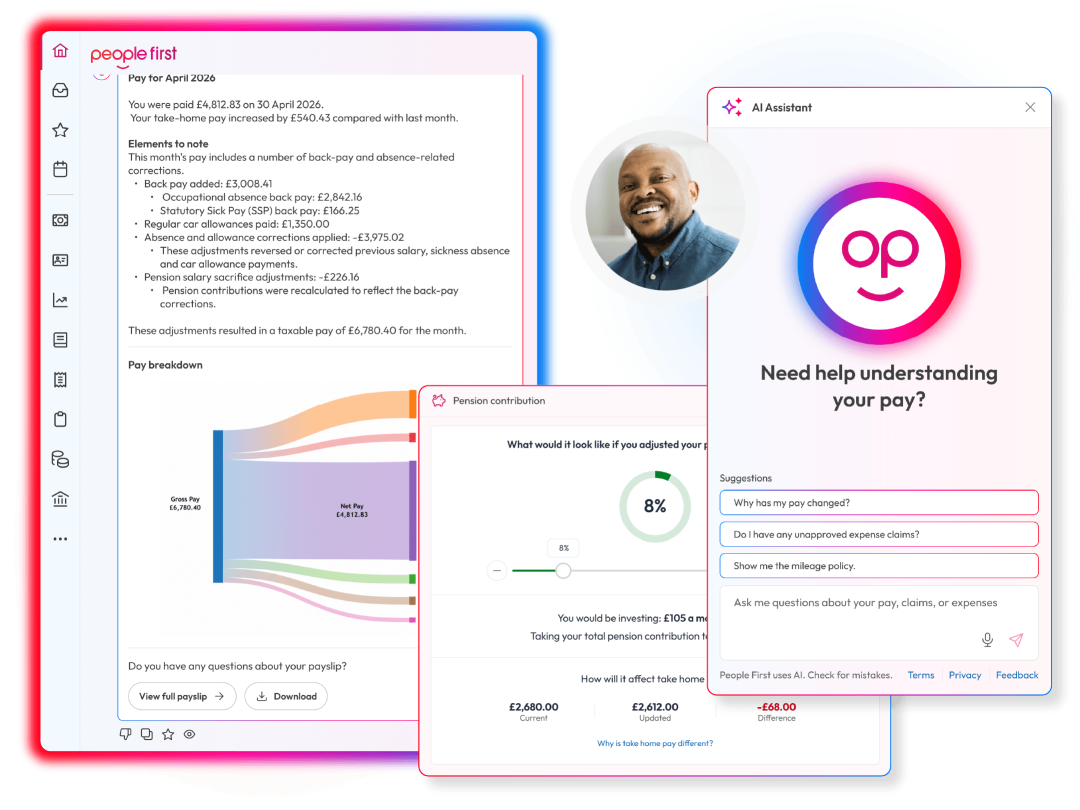










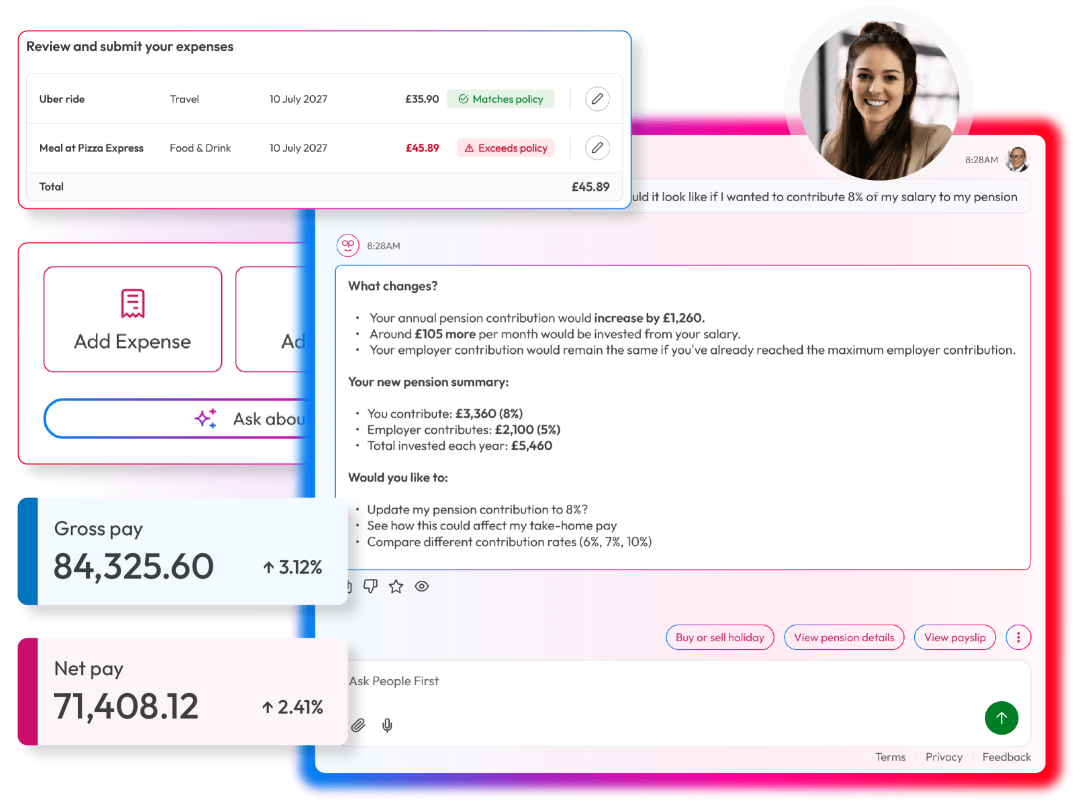
Payroll questions create uncertainty
When employees have questions about pay, deductions or pensions, they want answers immediately. Payroll teams can spend valuable time handling routine enquiries, creating unnecessary administration. Give employees access to the information they need, reduce reliance on payroll support and help people feel more confident about their finances.
How People First supports financial wellbeing






More than just financial wellbeing
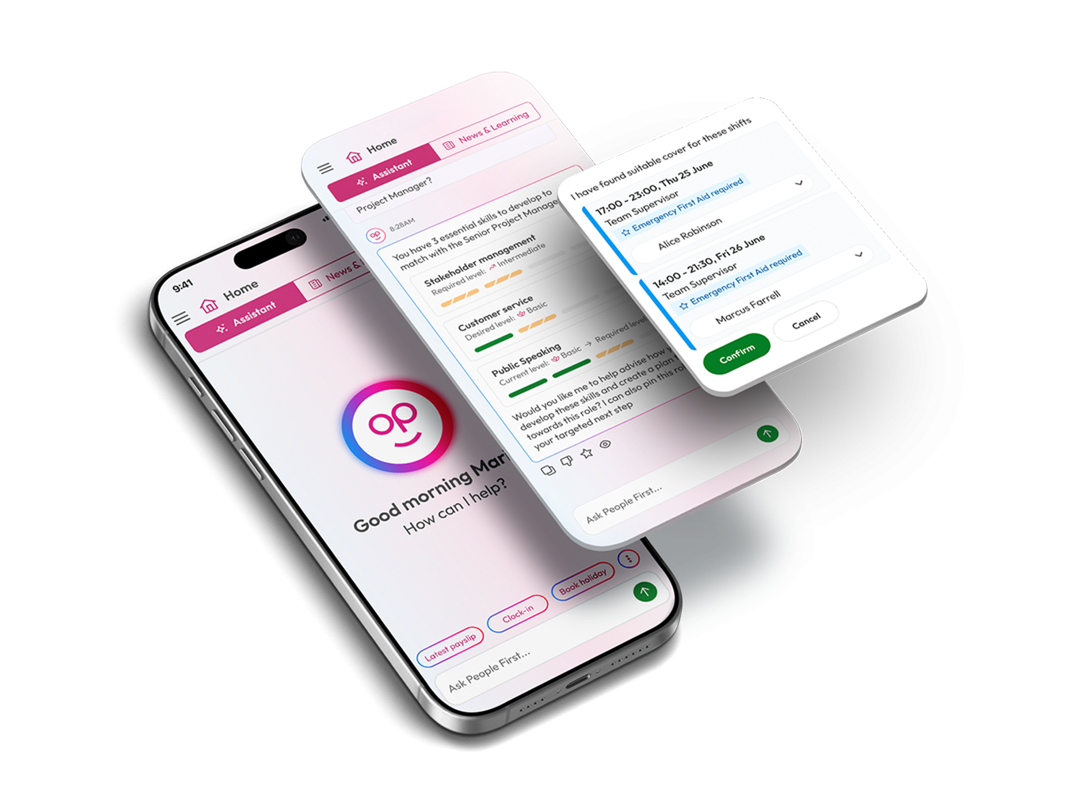
People First connects payroll, HR, workforce management and analytics in one platform. Employees gain the information they need to understand pay and workplace decisions, while organisations benefit from connected data, greater visibility and streamlined processes that improve productivity, engagement and operational efficiency.
Why choose People First?

Stay compliant
Built-in legislative compliance and regular software updates keep you in line with the law, taking another worry off your plate.

Automate the boring bits
AI powers key features cross People First, letting you analyse data, get answers, and tick off tasks without hours of manual effort.

Get started wuickly
People First is ready to go with minimal setup. From there, it's very easy to manage, and employees can access it everywhere.








FAQs
-
Employers can change their pay cycles from weekly to monthly pay to reduce internal costs, free up time for the payroll team and reduce risk of admin errors. Employees are therefore enabled to manage their pay frequency when it suits their lifestyle.
-
61% of users say their quality of life has improved because they have access to the app, while 67% say it makes them feel more in control of their financial future. Just under half (46%) have avoided a payday loan and 55% have reported an improved ability to plan their finances.
-
Across all of the organisations who have implemented Financial Wellbeing from MHR, we find that individuals use the flexible pay feature in different ways depending on their circumstances:
- Some choose to use flexible pay as a way to manage their budget on a weekly cycle, and will regularly draw down the full amount of pay available to them each week
- Some people use flexible pay as their everyday payment tool, for example instead of using a credit card or overdraft. Many people report that they find using flexible pay better and safer for their circumstances because the mechanical link between earnings and pay means they cannot inadvertently overspend
- With 14m people in the UK having £100 or less in savings, some will rely on the feature to cover unexpected expenses such as a car repair or replacing an appliance, which can be highly problematic if there’s no money saved up to cover it
- Roughly 35% of individuals who use flexible pay report that their hours vary so substantially that some months they can pay all their usual bills and some months they cannot. They use flexible pay to smooth out lumpy cash flow month to month