Setting goals
Get everyone on the same page from day one
While it might feel like the world is constantly changing, the goals of organisations and leaders haven’t changed much. We all want efficiency, growth, productivity, and impact. But how we get there has shifted. This is where a lot of conflict comes in.
60% of leaders aren’t clear on their personal goals for the year ahead, let alone the goals of the organisation at large.
Is it any wonder that employees aren’t matching their leaders’ expectations? If no one has a clear picture of their end goal or the timeline to achieve it, they’ll never know when they’ve got there.
The solution here involves taking things back to the drawing board.
Get started with one quick tip: Set goals that have a clear path to success and share those goals with the entire team
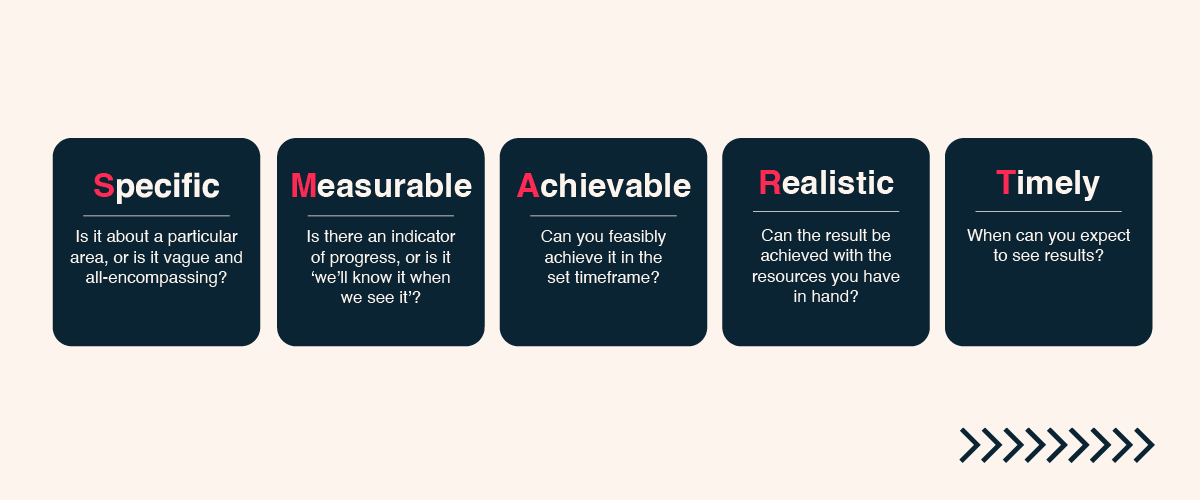
Check these goals against the SMART criteria
This will help you figure out which goals are viable, which might need to be adjusted, and which link together. These area, or is it vague and all-encompassing? to see results? of progress, or is it ‘we’ll know it when we see it? achieve it in the set timeframe? achieved with the resources you have in hand? are the goals you should communicate to the wider team and set out a plan of action together to achieve them.
Effective decision making
Be ready when the moment arrives
As a leader, your average day is made up of decision-making. Some of those decisions only make a small impact, so you won’t give them a second thought. But when those decisions really matter, you need to be ready to make them and make them quickly. On top of this, you have to balance short-term tactical thinking with long-term strategic thinking. There’s a constant need for balance, and it can be especially tempting to disregard the long term for quick wins.
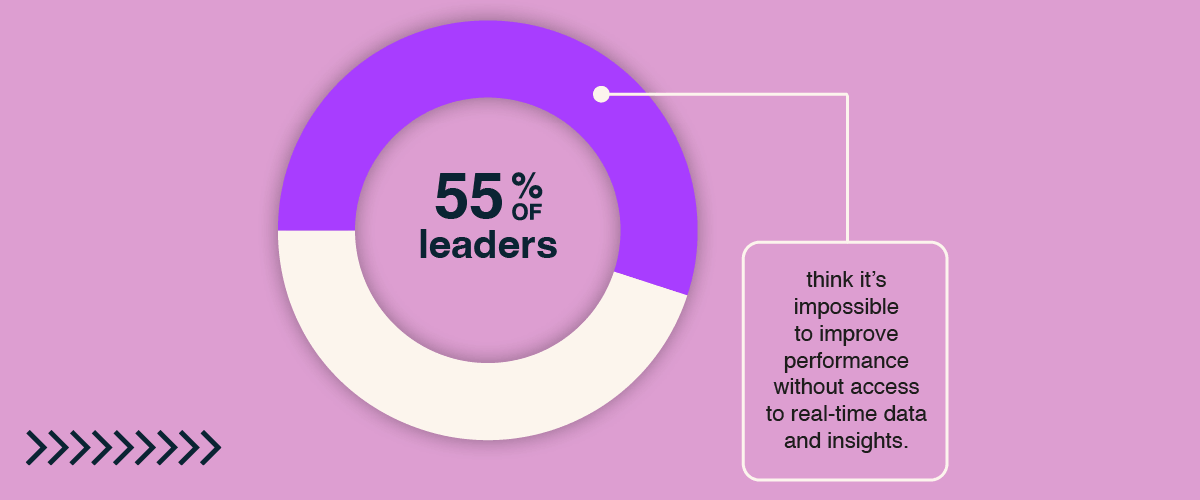
Data plays a huge part in effective decision-making. But it’s not just gathering it; it’s also getting that data at the right moment to support you. When you’re backed with real-time data, you know you’re making decisions with all the information you need, giving you and your team more reassurance and confidence in what you’re doing.
Removing silos between sources of data will help, as this improves data accessibility and collaboration across departments with a single source of truth.
AI is often pointed to as a great tool to support decision-making, as it can assist with forecasting and planning. The decisions ultimately need to be made by leadership, but it can help guide you through masses of information with minimal lead time.
Get started with one quick tip: Look into ways to unlock and unleash real-time data
Efficient processes
Always strive for a better way of doing things
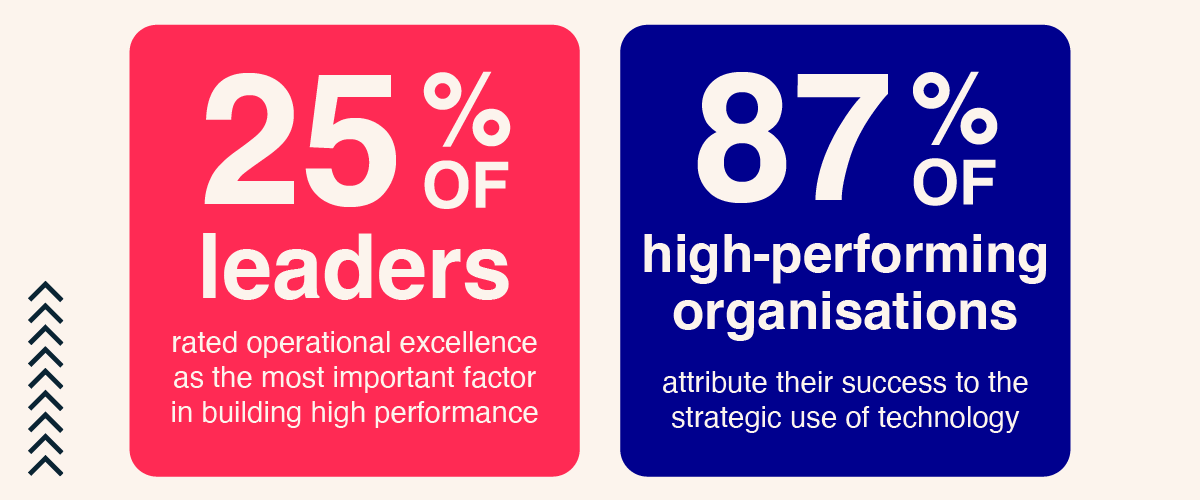
An interesting contrast in our data indicated that leaders felt operational excellence was a key driver to high performance… yet they also felt it was one of their weakest areas.
It makes sense. Effective processes, measured by clear KPIs make work easier. But it can be so easy to get caught up in the way things have always been done that finding the most effective process isn’t always simple. It also means you can often find yourself retrofitting old processes into new ways of working, as opposed to building new processes that suit those new methods straight away.
How often do you review processes? Do you allow teams to suggest changes? How much manual work could be automated? How has AI been adopted? These are all questions that must be asked if you’re aiming to find more efficient processes. They’ll also ensure you’re better equipped to handle change when it’s needed.
HR, payroll and finance software were cited the most vital pieces of technology in driving high performance. As, arguably, the key drivers of process efficiency – how happy are you with your current set up? Check out our tech review for more details on how to evaluate and improve your tech stack.
Get started with one quick tip: Scrutinise your 'we've always done it this way' processes, and figure out where you can make improvements.
Communication
High performing teams aren't built in silos
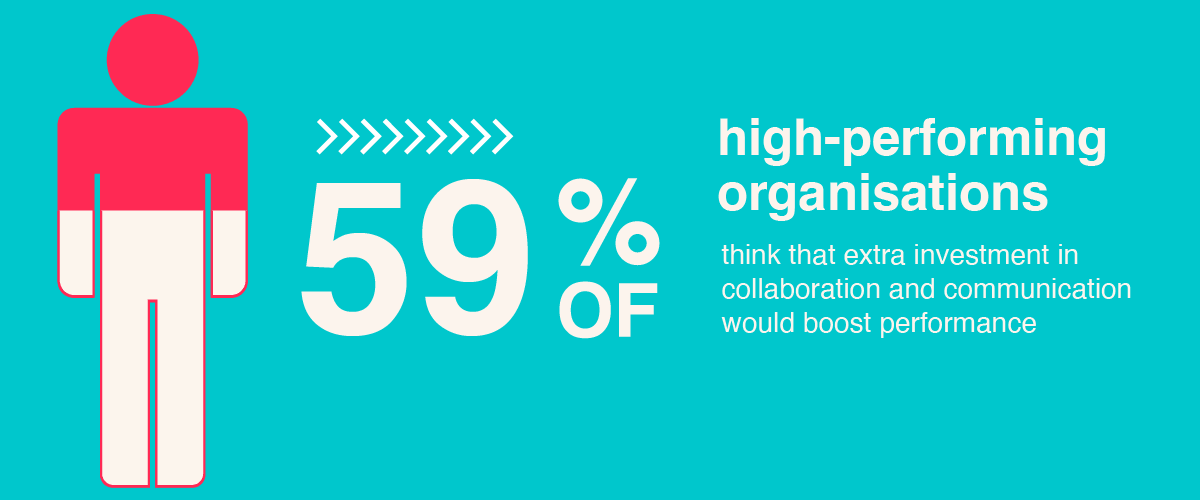
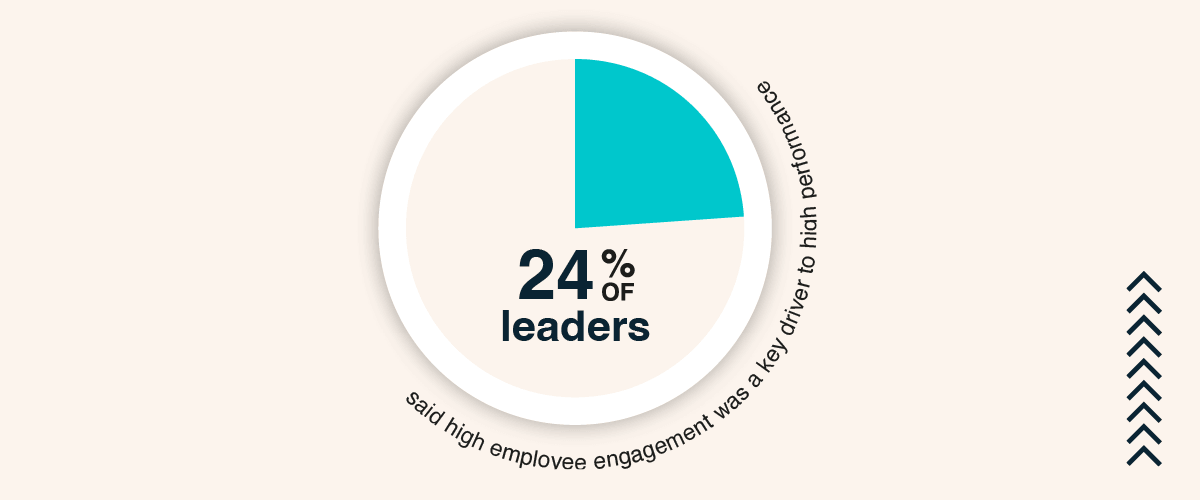
Communication forms a bedrock that supports a range of other techniques. For example, setting goals means nothing if you can’t communicate those goals. When employees feel heard, employee engagement reaches new heights, and high performance comes more naturally.
The best way to build effective communication is to model it from the top down. That means opening conversation channels. For example, pivoting to regular check-ins from formal appraisals gives everyone a space to offer open, regular feedback.
This pipeline goes both ways. Use it as an opportunity to embed high performance into every aspect of your organisation. You can also find out what your employees think and adjust your strategy accordingly.
One of the critical issues our research flagged suggests that neither leaders nor employees are wrong about high performance - they just fundamentally see the issue through two different lenses.
Employees have boots on the ground; they have to deal with day-to-day concerns, but that means they potentially lose sight of the big picture. Leaders have that big-picture view but can often forget to consider or fail to understand what an employee can do every day.
Check-ins will help everyone align. Good tech can support this with AI-enabled sentiment analysis giving you a clear picture of what’s going on.
Get started with one quick tip: Start holding check-ins and logging what employees say about morale and being a high performer.
Rewards and recognition
A little appreciation goes miles
This technique may seem simple, but it's vitally important. Different people are motivated by different things, and the employee who is solely motivated by their salary is rarer than you'd think. Many people thrive off rewards and recognition, and these can push them to greater heights. Making recognition a regular part of their time with you massively improves their employee experience.
Note that this isn’t a reason to deprioritise competitive wages. Rewards and recognitions work alongside a robust compensation package and general employee experience strategy to help an employee feel appreciated.
Internal communication platforms are very helpful here. They enable you to communicate wins and achievements within your team and across the business. When employees feel they’re on the right path, they feel reassured and able to push themselves along it.
This can also help overcome the disconnect between what employees and leaders think high performance looks like. When you reward employees, you’re encouraging them to continue performing well.
Get started with one quick tip: Start by thanking an employee for their high performance
Talent management
The talent feedback loop pays for itself
Modern talent management spans a huge range of functions. It’s how you keep employees on board with your mission, ensure they’re happy and productive and give them the capacity to build their skills. That’s the sort of thing that high performance is built on.
When you get this right, it supports autonomy and empowerment. Like many of the other factors at play, this leads naturally to high performance without having to force it. When you attract the right talent and ensure they’re nurtured properly, you get employees who are more engaged with your mission and keener to deliver high performance. That nurturing also means employees will get a clearer picture of what success looks like in your organisation, reducing the gap between leaders and employees.
Talent management creates a positive feedback loop. When you invest in it, you become a more attractive employer, leading to more talent competing for the opportunity to work with you. There’s a lot of power in aligning your career development programs with your talent pipeline, and using proactive succession planning to ensure key positions are always filled by great people who understand the organisation. Conducting talent mapping will help you identify current and future skills gaps across your organisation. That enables you to build effective development strategies for your current employees and more targeted recruitment for future ones.
But you can’t do this blindly. It all needs to align with your broader business goals, as well as your culture. Employees are more likely to engage with your talent management strategy if they feel involved in it, so take their thoughts into account. Remember: communication is a critical bedrock layer!
Get started with one quick tip: Read our practical talent management guide
Learning and development
Learning builds stronger teams
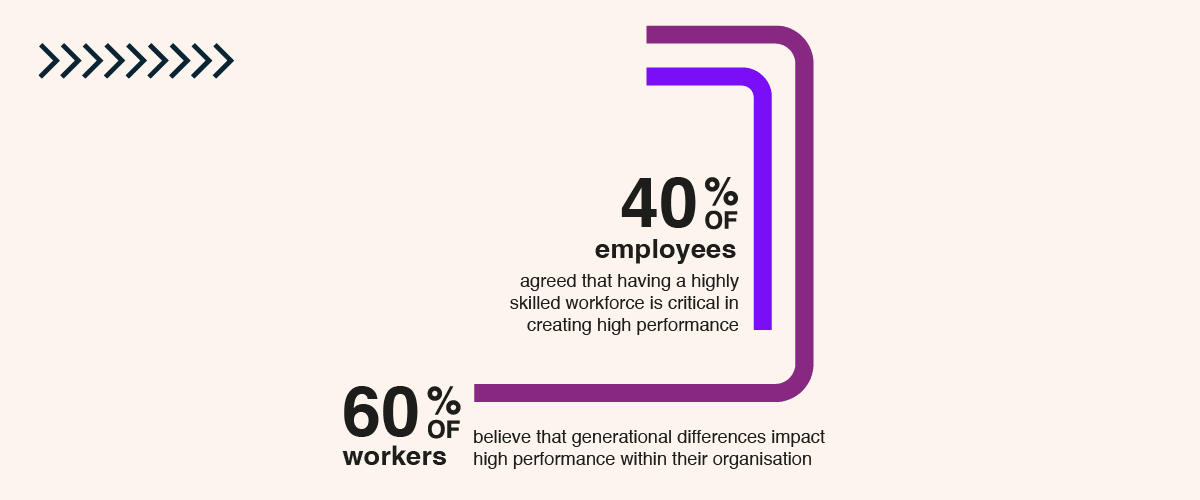
Skills gaps are a huge barrier to high performance, so conducting audits where you can spot potential risks is a critical first step. From there, you can start actioning a more robust learning and development (L&D) plan. This might include formalised learning, enabled by a learning management system(LMS), if your skills gaps are more around compliance and hard skills. It might require a more embedded learning culture for soft skills, as well as social learning, which is a more long-term strategic mission enabled by a learning experience platform(LXP).
There’s also a generational gap to consider. While 62% of leaders believe that Gen X (people born between 1965 – 1980) have the biggest positive impact on performance, this can lead to issues down the line without proper succession planning
Simply put, you cannot keep those older employees with you forever! Even if they decide to stay with you for the rest of their careers, they will retire at some point, leaving you with a skills gap problem that will cause a huge hit to your performance in time. You need an organic pipeline of talent and a strong succession plan where every generation is given opportunities to become a high performer.
This will become even more apparent as Gen Alpha (people born between 2010-2024) enter the workforce. As the most educated generation ever, they will likely put a strong focus on lifelong learning, and will look for workplaces that integrate this into their company culture.
Creating and managing multigenerational workforces, where younger employees are given the opportunities to gain the skills of their older counterparts, is critical. Mentoring and reverse mentoring (where a younger or less experienced employee mentors a more experienced one) can also provide a lot of benefits – without any formalised learning involved at all.
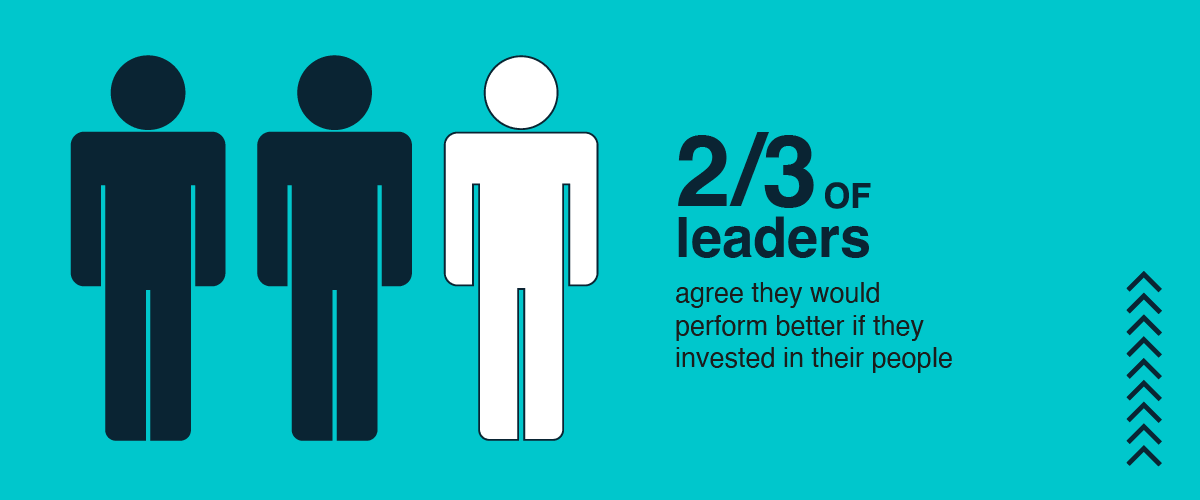
It can be tempting to avoid investing in employees out of the fear that they will leave and take that investment with them to other companies. That does happen. But it’s a natural part of the employee-employer relationship. Investing in employees means you build an employer brand as someone who cares, so you will naturally attract more high performing candidates. Likewise, while some employees will eventually leave even with L&D opportunities, many will stay for longer than they would without.
Get started with one quick tip: Conduct a skills gap audit and see what critical skills you’re missing
Strong leadership
It starts at the top
This is it. The driver behind every other point we’ve raised. Without strong leadership, high performance is just another unattainable idea. It takes strong leadership to set goals, make decisions and enable communication and recognition to spread from the top down.
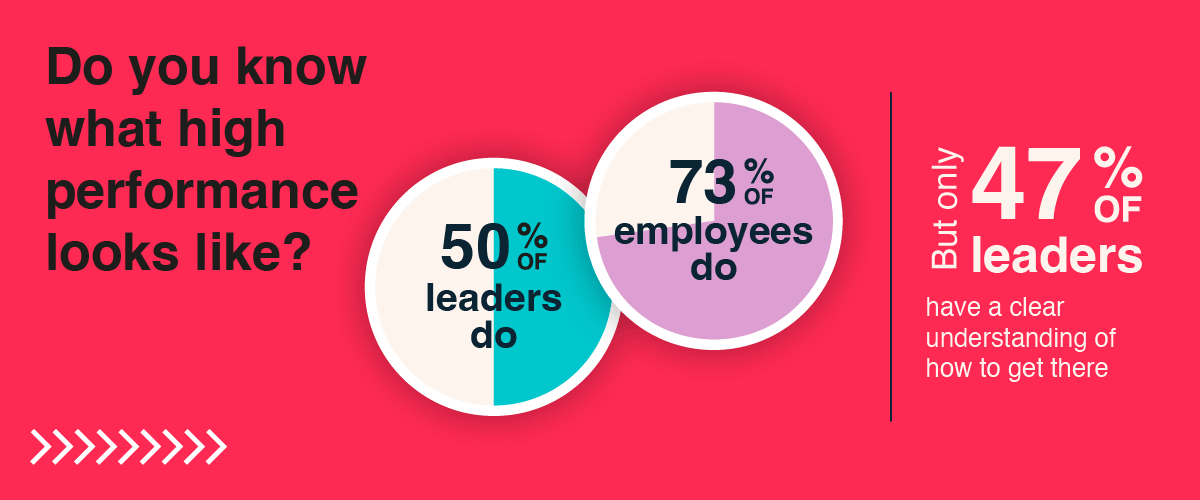
What our research showed is that a third of leaders admitted they don’t enable their team to achieve high performance. That makes sense when you consider only half of them say they have a clear picture of what high performance looks like. How can you lead a team if you don’t know where you’re going next?
Strong leadership isn’t about micromanagement or having constant oversight of everything your employees are doing. So much of what this guide covers is about setting employees up for success on their own. Strong leaders work smarter, building strategies informed by the needs of the organisation and employees that lead to long-term success.
It starts with figuring out where you stand.
What does high performance look like to you?
Once you have that, you can start putting the rest of the pieces into place.
Get started with one quick tip: Write down what high performance looks like to you, how you think your team can achieve it, and how you’ll measure success
Once you have that, you can start putting the rest of the pieces into place.
Get started with one quick tip: Write down what high performance looks like to you, how you think your team can achieve it, and how you’ll measure success
The next step forward
Technology is the high performance enabler
One thing should be clear. There’s no single solution to what defines high performance- because what high performance actually is can vary from organisation to organisation and moment to moment. But by getting that clearer picture, you can set your team on the path to success.
There was an area our survey flagged that had employees and leaders in complete agreement. 100% of leaders and 99% of employees say that the right tech is a vital factor in achieving high performance. It makes sense. While no single strategy will make you high performing, good tech such as our own People First can form a baseline from which high performance can grow. For starters, tech can ensure you have a more holistic, real-time picture of your operations, enabling stronger communication and faster decision-making. Rather than silos, tech enables disconnected employees to feel more like one team pulling towards a clear goal.
To learn more about the role technology - and specifically People First - can play in enabling high performance, download our checklist.