What is employee experience?
Employee experience is everything people encounter across their employee lifecycle, from the first job application to their final day. It includes the moments that get attention, like culture, recognition, and development. It also includes the ordinary moments that happen every week: finding a policy, updating personal details, or preparing for a check-in.
The real challenge isn’t launching more programs. It’s making sure everyday work is clear, dependable, and free of avoidable effort.
For example, can your employees:
- Find the current version of a policy without asking HR?
- Complete a routine request without knowing how HR works behind the scenes?
- Know who approves a request and what happens next?
- Start a new role with the access, equipment, and manager support they need?
- See how their training connects to future opportunities?
If the honest answer to any of these is “they ask HR,” the process is relying on a workaround.
A strong employee experience therefore depends on four things: clear processes, reliable information, supported managers, and connected technology.
Where employee experience gaps show up
Employee experience isn’t a standalone HR initiative. It runs through every stage of the lifecycle, so small process weaknesses can have wider consequences.
Our employee experience playbook breaks this down into seven practical plays. Here’s where gaps most often appear.
Hiring and candidate experience
Forms get added, hiring managers ask for information that’s already been captured, and candidate updates depend on someone remembering to send them. Candidates rarely say the process drove them away. They stop responding or accept another offer.
Onboarding and day-one readiness
Recruiting, HR, IT, and the hiring manager can each complete their task and a new employee can still arrive without access or a manager who feels ready. The gap is in the handoff, not the task.
Everyday HR tasks and self-service
When employees can’t tell which policy is current or who approves a request, the workaround is to ask HR. One request is minor. The same request repeated across a workforce signals a process that needs attention.
Manager support and consistency
If preparing for a check-in means searching several systems, the conversation is often what gets delayed. Employees feel the inconsistency from one manager to the next, and training alone won’t fix a cumbersome process.
Managers’ own experience matters too. Gallup’s 2026 report found global manager engagement fell from 31% in 2022 to 22% in 2025, just three points above non-managers at 19%. That narrowing gap is worth watching because managers play a key role in overall team engagement.
Turning this trend around is not beyond reach; Gallup also found that among 'best-practice' organizations, 79% of managers are engaged at work.
Communication and reach
A company-wide message can still miss people who work different shifts, move between locations, or spend little time at a computer. A strong overall reach figure can hide a weak result for one group.
Communication also shapes how employees experience recognition and team support. SHRM found that 34% of U.S. workers reported a lack of recognition for their contributions, while 25% cited insufficient collaboration or support within their teams. Track these alongside message reach to see where employees may need more consistent communication.
Learning, development, and career growth
Training, performance, and career development may each work on their own, but employees struggle when the links between them are missing. When people can’t see a future inside the organization, they may look for one elsewhere.
Retention and early warning signals
An exit interview can explain a resignation but can’t prevent one. Earlier signs often sit in feedback, recurring HR requests, and participation, and a healthy company-wide number can conceal a problem in one location, team, or role.
The hidden cost of employee experience gaps
Employee experience problems don’t usually start with a crisis. The cost builds through small frictions: a candidate entering the same information twice, a new hire waiting on software access, or a manager putting off a check-in because the process is cumbersome.
Repeated friction can wear down employees’ connection to their work. That matters because employee engagement has wider productivity implications: Gallup estimated that low employee engagement cost the global economy $10 trillion in lost productivity in 2025, equivalent to 9% of global GDP.
There’s an immediate administrative cost too. HR teams spend time on another email, another correction, and another exception, and the work often depends on the one person who knows how the process really works. That’s a big part of where hidden HR work starts, and it limits HR capacity for work that matters more.
The bigger problem is that these gaps make it harder to spot what’s happening to your workforce. By the time a pattern shows up in turnover, the experience behind it may have been building for months.
What does a strong employee experience look like?
A strong employee experience makes everyday work easy to complete and easy to trust, even for lean HR teams. That takes more than good intentions. It takes clear, repeatable ways of working.
Make routine tasks self-service
Give employees one reliable source of information and a simple way to complete common tasks themselves, without needing HR to explain the next step.
Design the handoff, not just the task
Where several teams are involved, give every step an owner and a deadline, and have one person confirm readiness before the employee starts.
Give managers what they need in one place
Diagnose whether the obstacle is capability, information, process design, or time before booking more training. Then remove administration that adds little value.
Reach every part of the workforce
The route may differ by role, location, or working pattern, but the standard shouldn’t. Compare who opened, responded, or took part, and check each channel fits how that group works.
Close the loop on feedback
Decide what can change, who owns the response, and when employees will hear what happens next, including for ideas you can’t take forward. Silence teaches employees that speaking up changes nothing.
For lean HR teams, the goal is simple: remove avoidable effort, clarify responsibilities, and build processes that stay consistent as the organization grows.
A practical way to assess your employee experience
You don’t need to redesign everything at once. Start with one request that appears in the HR inbox frequently, then try to complete it as an employee would, without HR knowledge or shortcuts. Ask:
- Find: Can employees find the answer easily?
- Source: Is there one reliable source of information?
- Complete: Can they finish the task without knowing how HR works behind the scenes?
- Access: Can they do it on a mobile device, and away from a desk?
- Ownership: Is it clear who owns each step and who approves it?
- Handoff: What happens when the task passes between teams?
- Pattern: How often does the same question or workaround come up?
The weak points usually become clear quickly. If a step depends on someone noticing an email, remembering to send an update, or knowing the workaround, it’s a good candidate for a more connected process.
To take a broader view, score each of the seven plays from 1 to 5. Your total out of 35 shows how your employee experience is performing overall, and your lowest-scoring play shows where to start first.
Our employee experience playbook, which is free to download, includes a full scorecard for this and more information.
How People First helps
People First brings core HR, talent management, and employee engagement together on one platform, replacing the patchwork of separate systems behind many employee experience gaps.
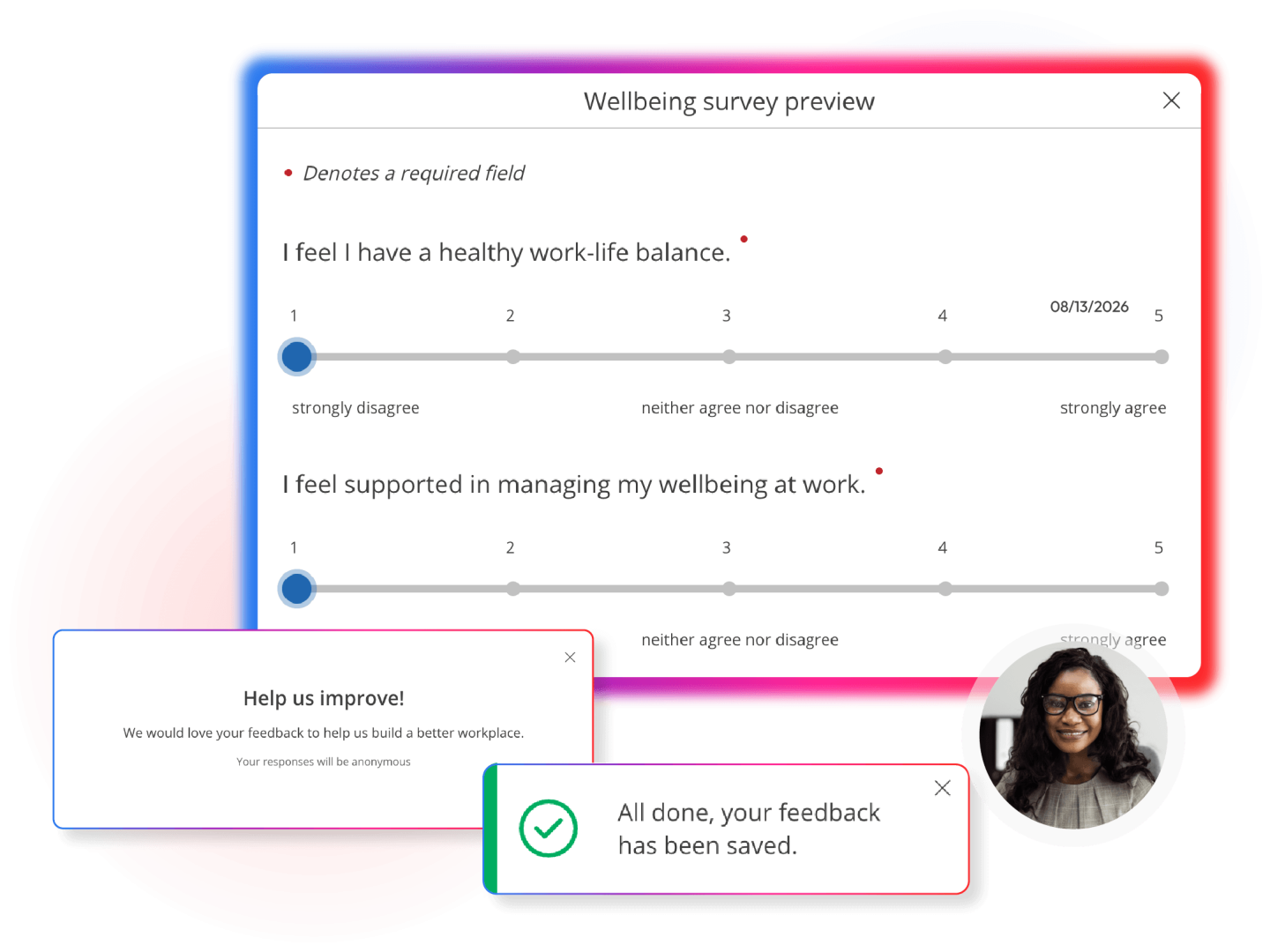
Instead of relying on disconnected records and manual follow-up, teams can use a connected foundation to standardize everyday processes and give employees and managers clearer next steps.
That can help organizations:
- Reduce repeated data entry and correct fewer records
- Give employees one place to find information and complete routine tasks
- Create smoother handoffs from hiring to onboarding
- Give managers the information they need without chasing HR
- Connect learning, performance, and development to future opportunities
- Spot patterns in feedback, participation, and turnover earlier with analytics and reporting
Technology alone doesn’t create a great employee experience. Culture, leadership, and manager behavior matter, and software can’t fix a process that isn’t clear.
It can make good processes easier to follow, routine work easier to complete, and emerging problems easier to see.
Build a better employee experience into everyday HR
The best time to discover a broken process isn’t when someone resigns or a new hire’s first day goes wrong.
A better employee experience comes from fixing the small, frequent frictions early: removing repeated steps, clarifying ownership, and making information easy to find. A small improvement, repeated hundreds of times, can make everyday work noticeably easier and more dependable.
Start with the problem that occurs most often. Map the people, information, and handoffs it depends on, then identify where a connected workflow could remove a manual step or make the next action clear.